Ernst Meisenburg
Creator of Meisenburg notation
History
Following William Thompson‘s retirement in 1896, his successor Richard Hague had the idea of starting the documentation and notation of the ballets to preserve his predecessor’s legacy. However, at that time no systems of dance notation were used or well developed, at least in London or among any of Hague’s acquaintances. As this was not Hague’s main priority, there were no major developments on the project until 1899, when Hague was introduced to Ernst Meisenburg.
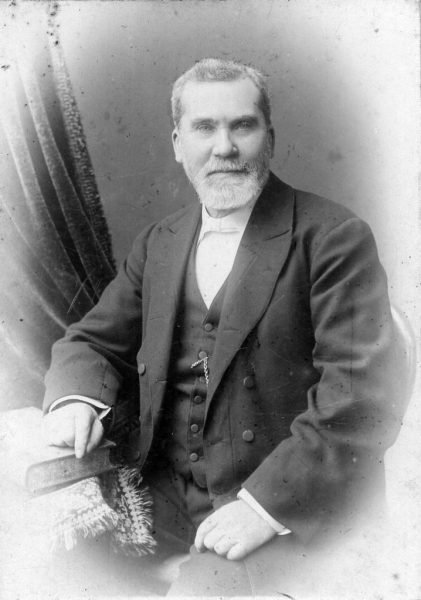
Meisenburg, a Saxon by birth, was a dancer turned choreographer turned répétiteur who had worked at the Alhambra Theatre since 1895. Meisenburg had been developing his own system of dance notation and after several conversations with Hague, Hague decided that Meisenburg’s notation system would just about serve his purpose.
Hague swiftly engaged Meisenburg to notate the ballets of Covent Garden and the first ballet to be notated was the 1899 production of The Wayward Daughter (though only the first act and about a quarter of the second act). Between 1899 and the First World War, the vast majority of ballets performed at Covent Garden were recorded in Meisenburg’s Chorégraphie Codifiée (more widely known today as Meisenburg Notation though some older sources refer to it as simply English Notation).
Unfortunately, following the outbreak of war, little survives about Meisenburg’s life. Meisenburg left London due to increasing anti-German sentiment. It does not seem that he returned to London following his departure, nor does it seem that he continued to work in the theatre world in Saxony or elsewhere. However, we do know he returned to Saxony at some point, as evidenced by his grave being in Dresden.