Marta Draeger
A première danseuse at Covent Garden
History
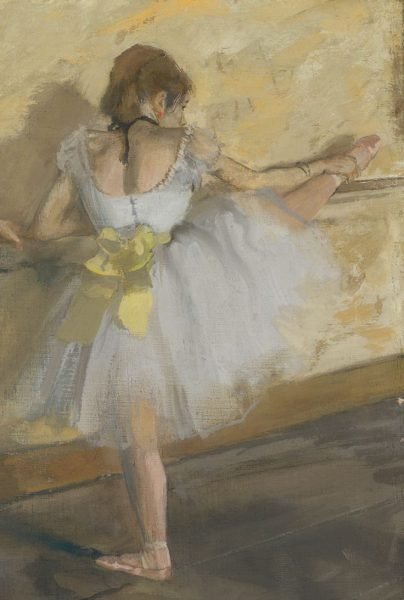
Marta Dräger (anglicised to Draeger) was a celebrated première danseuse at Covent Garden.
Draeger was born in Berlin in 1859 and began her dance training under the tutelage of Signor Alessandro, a danseur who had previously trained at La Scala in Milan and had danced for a few years with the theatre’s troupe. At some point, he had moved to Berlin and opened a ballet school, specialising in teaching the training method of the virtuoso Italian school which differed vastly from the more elegant, graceful French school, dominant throughout the German Empire. The young Draeger seems to have taken well to the training of the Italian school, as she would continue to be described as “dancing in the Italian style” throughout her career.
In 1879, Draeger began her career at the Königliche Oper in Berlin under the balletmaster Paul Taglioni, brother of the legendary Marie Taglioni. She rose quickly through the ranks, and by 1885 she was one of the leading sujets of the troupe. She likely wished for a promotion to prima ballerina, but as there were no ballerina positions available at the time, Draeger could not be promoted. Additionally, Antonietta Dell’Era, the reigning ballerina at the Königliche Oper, allegedly did not much like Draeger, which could have stalled Draeger’s promotion to the rank of ballerina. It was likely due to this friction that Draeger took a leave of absence and accepted an invitation to tour with Karl Rausch, an impresario who was assembling a ballet troupe to tour several cities in Europe in 1885/1886. The troupe toured to Munich, Prague, Dresden and Hamburg before moving on to Brussels, Paris and finally to London.
Whilst in London, Rausch’s troupe performed at The Lyceum Theatre and Draeger portrayed the rôle of Hyppolita in the ballet Thésée et Hyppolite. It was here that William Thompson first encountered Draeger, as he had attended several performances of Rausch’s troupe at the Lyceum and had seen Draeger in Thésée et Hyppolite. Thompson appears to have been impressed by her performance, as he sought an introduction to her, and their continued conversations eventually resulted in Thompson extending an invitation to her to join his troupe at Her Majesty’s Theatre as a première danseuse, starting in the 1887 season. The invitation was due to the recent retirement of Thompson’s première danseuse Isabella Velluti at the end of the 1886 season, and Thompson was looking for a danseuse to fill the position.
After some deliberation, Draeger accepted William Thompson‘s invitation to move to London and to dance in his troupe, reasoning that her prospects were better in London than in Berlin. Her debut was to be the titular nymph in Ondine, with François Bardet composing new supplemental additions for her. However, due to quarrels with Mapleson, the manager of Her Majesty’s, Thompson moved his troupe to another theatre, the Royal Italian Opera at Covent Garden. Draeger moved with the troupe and, due to the move, made her debut on the Covent Garden stage two weeks after the scheduled date. Her performances were well received by the critics, though better received by some more than others, with those who appreciated her performances praising her ease, technical skill and dramatic acting, especially in the third act. Draeger herself would later state that she did not much like the ballet, save for its third act, which she enjoyed very much.
Draeger would remain in London for the next eight years and enjoyed a wide variety of roles. The highlights of her career included her performances as Médora in The Corsair (1889), Béatrix in The Beauty of Ghent (1891), Esmeralda in Esmeralda (1894) and Mazourka in The Devil to Pay (1894). In addition to her other roles, two new ballets were created for her, Alice’s Adventures in Wonderland in 1890 and Pygmalion in 1893. Draeger also appeared in operas at Covent Garden, appearing in the revival of Gounod’s Fausto in 1888 as Cléopâtre and famously as the Abbess Héléna in the 1889 revival of Meyerbeer’s Roberto il Diavolo. She also appeared in Shakespeare’s As You Like It at the Lyceum in 1889 and in the 1890 revival of Thomas’ Esmeralda where Thompson revived the Pas de Deux Valsé (originally composed c. 1865) for her.
In the summer of 1890, Draeger was invited by Emil Graeb, the ballet director in Berlin, to return to the Königliche Oper to dance in the 1890/1891 winter season as a guest ballerina. Draeger accepted the invitation and made her debut as the titular rôle in Ellinor oder Träumen und Erwachen, a ballet which was revived for her by Graeb. She also danced in the Walpurgisnacht scene of Gounod’s Faust during the 1890/1891 winter season. She received good reviews for her performances and would be invited to return to Berlin each winter for the next four years, adding the ballets of Satanella oder Metamorphosen in 1891 and Sylvia in 1894 to her repertory at the Königliche Oper.
Throughout her career, she was praised for her presence, technical skill, dramatic acting and virtuosity. She was well suited to dramatic and active heroines, able to command the stage and move the emotions of the audience. She was considered a virtuosa of the “Italian School,” as even though she did not train in Italy (she trained in Berlin) she completed her training under the direction of an Italian teacher, Signor Alessandro, who had previously danced at La Scala in Milan. Additionally, Draeger’s name is mentioned as having attended the classes of a Signora Rampino, a London-based teacher who had twice refused Thompson’s invitation to teach at the Covent Garden School for Ballet (later the Royal Ballet School).
In late 1893 Draeger decided that she wished to retire from the London stage for two main reasons. Firstly, she considered her rôle as Galatée in Pygmalion to be her crowning glory and so wished to end her career on such a high note. Secondly, and more curiously, she had allegedly grown tired of the apparent hostility of Sarah Nicholson, the other première danseuse at Covent Garden, who seemed, at least to Draeger, determined to make Draeger her rival. Though this was a development that Draeger allegedly did not care much for, Draeger was not opposed to sidelining Nicholson in favour of herself, having done so in the 1889 revival of Roberto il Diavolo. Additionally, there was some truth to Nicholson’s claims that Draeger was the favoured première, as Draeger received Thompson’s new creations and most lavish revivals and Thompson was, in general, more receptive to her requests than Nicholson’s. This has led modern scholars to question the one-sided nature of Nicholson’s rivalry with Draeger, as Draeger, though she was not as active a force as Nicholson, certainly benefitted from Thompson’s favouritism.
Despite Draeger’s decision, neither the theatre managers nor Thompson wished her to retire as she was far too popular. Thus, a compromise was made. Draeger would dance one final season on the London stage in 1894. The theatre director offered to have a new ballet created for her but she refused, choosing instead to dance in Esmeralda for her benefit, which had not been seen in London since 1878. Thompson also revived The Devil to Pay for her in the same season, a ballet that had not been seen in London since 1884. Her performances as Esmeralda and Mazourka were highly praised and succeeded in reviving interest in the two mostly forgotten ballets at Covent Garden, leading to the rôles becoming sought after by subsequent Covent Garden danseuses.
After Draeger left London in 1894, she returned to her native Berlin where she danced in the 1894/1895 winter season, dancing in her ballets of Ellinor, Satanella and Sylvia. At the end of the winter season Draeger retired from the stage for good at the age of thirty-five, and she soon joined the faculty of the Königliche Oper as a répétitrice, coaching dancers of the troupe in matters of style and artistry. Though she did not care much for character rôles, she was on occasion persuaded to do them.
In 1903, Graeb expressed a desire to stage Pygmalion for the ten-year anniversary of its creation. Draeger seemed receptive to the idea, and wrote to Richard Hague (Thompson’s successor as balletmaster) at Covent Garden for permission to do so. Hague obliged, and a balletmaster was sent with the orchestral score to stage the ballet. Draeger danced the character rôle of Vénus and also assisted with the staging of the ballet, at times clashing with the Covent Garden balletmaster where the “modern version” differed from what she remembered from 1893. Much to Draeger’s satisfaction, Die Marmorstatue (the title under which the ballet was staged in Berlin) was well received, though some Berlin critics shared the London criticisms of the length of the third act. Die Marmorstatue was retained in the repertory until the post-war era, being performed for the final time in 1921.
Rôles
- Ondine in Ondine (1887)
- Giselle in Giselle (1888)
- Sarah in The Amphitrite (1888)
- Médora in The Corsair (1889)
- The Spirit of Pride in Faust (1889*)
- Alice in Alice’s Adventures in Wonderland (1890)
- Lise in The Wayward Daughter (1890)
- Béatrix in The Beauty of Ghent (1891*)
- Sylvia in Sylvia (1892)
- Galatée in Pygmalion (1893)
- Esmeralda in Esmeralda (1894)
- Mazourka in The Devil to Pay (1894)
Created rôle in new ballet
First London revival, new productio