Élodie ou La Fée du Forêt
Or Élodie or The Fairy of the Forest
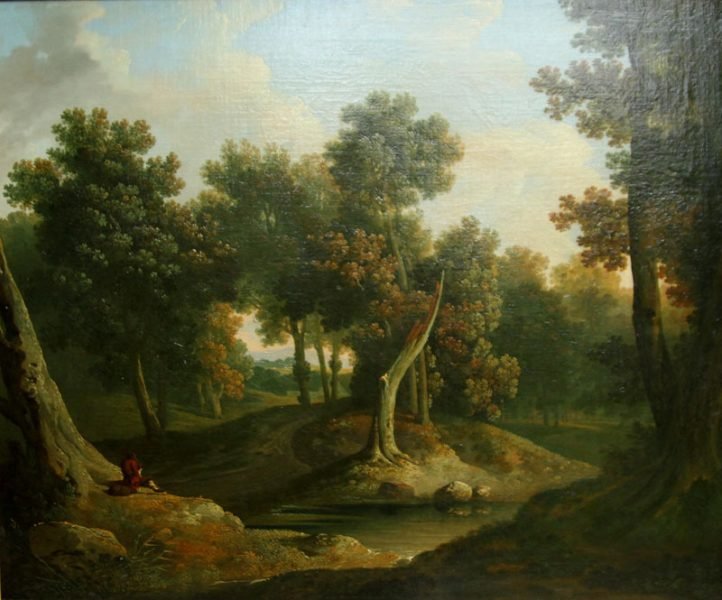
Ballet pantomime in two acts and three scenes premiered on 24th May 1888 at the Royal Italian Opera, London
Choreography: William Thompson
Music: François Bardet
Premiers Rôles
Élodie: Emma Ashfield
Arnaud: Rafael Caravetti
Baron: Edward Lamb
Plot
Acte 1
Scène 1 – A village square
The peasants celebrate May Day. They decorate the town square for the celebration.
Arnaud, a woodcutter, enters with his fellow workmen to build a maypole. The woodcutters are greeted by their sweethearts but Arnaud has none. He tells of a beautiful woman he saw in the forest while cutting wood one evening and the others laugh and mock him, saying he must have been delirious from hard work.
The trumpets sound for the celebration of the festival. There are dances to celebrate the festival: first is a Pas de Trois, then a dance of the lily of the valley with young girls dressed in white and a Polka-Mazurka for all.
After the Polka-Mazurka the Baron enters to interrupt the festivities. He is the cruel lord of the lands and all the peasants are terrified of him. He singles out a man who had not paid his taxes and asks his men to flog him. Arnaud intervenes and is apprehended by the Baron’s men. The Baron tells Arnaud to retrieve a legendary flower, one that few believe exists. He, in his overconfidence, states that he will give up his title to Arnaud if he retrieves it but will put him to death if he doesn’t. Arnaud sadly departs, sure he will not succeed.
Scène 2 – A forest glade
Arnaud enters the forest, distraught at his impossible task. He sees the apparition of the same beautiful girl he saw before and follows her through the forest. She flies around him before he comes upon a tree in a different part of the forest. He inspects the tree, finding it suitable to fell and readies his axe. However, Élodie reappears and begs Arnaud not to cut down her tree. He, enchanted by her beauty, agrees. He asks her about the magic flower and she replies that she will retrieve it for him. He thanks her and she calls on her sister dryads to dance. She gives him a branch, telling him to turn it in his hand if he needs her and tells him to return to the Baron. She kisses his forehead for protection and disappears.
Acte 2 – A Grand Ballroom
The Baron is hosting a ball at his castle. He welcomes the guests as they enter, greeting and saluting them. To entertain the guests the Baron brings out foreign dancers, dancers from Spain, Hungary, Italy and Scotland.
Arnaud enters and is apprehended by the Baron’s men. He, as Élodie had asked him to do, tells the Baron that he has not retrieved the flower. The Baron is outraged and so orders his guards to take him away but not before Arnaud is able to break the branch on the floor. No sooner has he done so that Élodie appears. She captivates the Baron with her ethereal beauty. He entreats her to dance and she agrees, dancing with the Baron and Arnaud.
The Baron is so captivated by her beauty that he gives Élodie a jewelled necklace. The Baron continues to press Arnaud but Élodie dances around him to distract him. The Baron becomes so captivated that he regards Élodie only and lays his sword at her feet.
Élodie reminds the Baron of his promise that if Arnaud retrieves the legendary flower he will become the new Baron. The Baron laughs and restates the promise, believing Arnaud doesn’t have the flower. However, Élodie truimphantly produces the flower and hands it to Arnaud. The Baron is furious but as all the guests have witnessed the promise he is forced to give up his title. As he storms out the company celebrates, as they no longer must suffer at the hand of the cruel Baron. Arnaud thanks Élodie and she kisses him before disappearing.
History
Original Production
Due to ongoing quarrels with the management at Her Majesty’s Theatre, Thompson moved his troupe to Covent Garden in 1887. That year two ballets were presented, the familiar Ondine and a brand new creation set to music by Bardet titled The Amphitrite.
The following year Thompson embarked on a more ambitious project, creating a multi-act ballet of his very own. It was to be called Élodie or The Fairy of the Forest. Set to music by Bardet in two acts and three scenes, it was a ballet in the romantic tradition, concerning the love between a mortal man (the woodcutter Arnaud) and a supernatural woman (the dryad Élodie). The ballet was well received at its premiere and even drew favourable comparisons to Giselle (which was also presented in the 1888 season as a sort of companion piece). Though some criticised the ballet for being too close in plot to Giselle, most noted that it was different enough to stand on its own two feet.
Though Ashfield premièred the rôle of Élodie and danced a number of performances, she sustained an injury during a rehearsal and was forced to withdraw for the remainder of the run. The rôle was covered by Ivy Gregson, who had originally created the second variation in the Pas de Trois. Gregson’s rôle in the Pas de Trois was covered by Mary Butler, who also covered Ashfield’s other rôle of Sarah in The Amphitrite.
Résumé des Scènes et Danses
Acte 1
Scène 1
1) Ouverture
2) Scène Première – La Place de Ville
3) Scène – Entrée des Bûcherons
4) Scène – Récit d’Arnaud
5) Pas des Bûcherons
6) Scène – Entrée des Paysans
Divertissement
7) Pas de Trois
a) Entrée
b) Allegretto
c) Variation I
d) Variation II
e) Variation III
f) Coda
8) Pas des Muguets
9) Polka-Mazurka
10) Scène Finale – Entrée du Baron
Scène 2
11) Entr’acte
12) Scène – Désespoir d’Arnaud
13) Scène – Apparition d’Élodie
14) Pas des Dryades
a) Adage
b) Valse
c) Variation pour deux dryades
d) Variation d’Arnaud
e) Variation d’Élodie
f) Coda
15) Scène Finale
Acte 2
16) Marche
17) Scène – Les Invités
18) Polonaise Dansée
19) Scène – Entrée du Baron et sa Suite
20) Danses Nationales – Divertissement
a) Introduction
b) Danse Espagnole
c) Danse Italienne
d) Danse Écossaise
e) Danse Hongroise
f) Coda Générale
21) Scène – Entrée d’Arnaud
22) Scène – Apparition d’Élodie
23) Pas d’Action (Pas de Sept)
a) Adage
b) Pas de Quatre
c) Variation d’Élodie
d) Coda
24) Scène Dansante – Les Jeux des Invités
a) Scène
b) Le Cotillon
25) Scène Dansante – Élodie et le Baron
26) Scène Mimique – La Triomphe d’Élodie
27) Galop Générale
28) Scène Finale
London Revivals
1908 Revival
In 1908 the ballet was revived by Richard Hague for Jane Wheaton under the simplified title of The Fairy of The Forest with musical revisions by Arthur Granville. This was Granville’s first foray into the world of ballet, and he studied several ballet scores as well as attended ballet classes and rehearsals to fully familiarise himself with the conventions of the genre. Granville’s primary task was to revise Bardet’s 1888 orchestrations, which were considered in several places to be in need of enlivening and modernisation. Granville was also tasked with providing some supplemental pieces but, as had become the norm at Covent Garden by that time, some of the supplemental additions were interpolations from other works, with fewer being composed than might have been done in earlier productions.
Rôles
Élodie: Jane Wheaton
Musical Revisions
Bardet’s original three variations for the Pas des Dryades were cut and three new variations were added. Two of the variations were for female sujets and one was for Élodie herself, with Arnaud’s variation being completely cut from the pas:
- The first variation was a supplemental written by Péchard for the Grand Pas des Corbeilles in the 1894 revival of Esmeralda with Draeger in the titular rôle. The variation was later replaced in the 1901 revival with a supplemental variation that Péchard had composed for the 1892 revival of The Peri
- The second variation was a supplemental variation written by Bardet for the Pas de Quatre of the 1882 revival of Marco Spada
- The third variation, for Élodie, was newly composed by Granville
The Danses Nationales divertissement of the second act was replaced by a new Divertissement set to new music by Granville. The Pas de Dix was danced by a lead couple with four supporting couples (five ladies and five men in total). The lead danseur did not receive a variation of his own, though he did dance a solo during the waltz. The variation was danced by the lead danseuse.
A new variation was added for Arnaud in the Pas d’Action of the second act, originally a supplemental variation which had been composed for Djémil in the Grand Pas d’Action of the 1900 revival of Naïla.
A new variation was added for Élodie in the Pas d’Action. Originally, it was planned for a new variation to be composed for her by Granville, but the decision was soon changed to her new variation being an interpolation. Wheaton requested to dance Médora’s variation from the Pas de Distraction of The Corsair, a request which was denied by Hague. Hague instead interpolated a supplemental variation written for Yedda in the Grand Pas des Esprits from the unsuccessful 1904 revival of Yedda. This triplet waltz was considered “charming” and “gay” by contemporary critics, who seemed to be much more favourable to the variation in its new context. The variation was notable as being the last composition that Péchard wrote for ballet; he had already finished the score for his last ballet Tristan et Yseult (1903) and was to retire at the end of the 1903 season.
Granville’s revisions and additions were appreciated by both Hague and the dancers, leading Hague to commission a full-length score from Granville for the 1909 ballet Alcandra or The Amazons, for which Granville’s score received praise.
Résumé des Scènes et Danses
Acte 1
Scène 1
1) Ouverture
2) Scène Première – La Place de Ville
3) Scène – Entrée des Bûcherons
4) Scène – Récit d’Arnaud
5) Pas des Bûcherons
6) Scène – Entrée des Paysans
Divertissement
7) Pas de Trois
a) Entrée
b) Allegretto
c) Variation I
d) Variation II
e) Variation III
f) Coda
8) Pas des Muguets
9) Polka-Mazurka
10) Scène Finale – Entrée du Baron
Scène 2
11) Entr’acte
12) Scène – Désespoir d’Arnaud
13) Scène – Apparition d’Élodie
14) Pas des Dryades
a) Adage
b) Valse
c) Variation I (supplemental variation written for Diane in the Grand Pas des Corbeilles in the 1894 revival of Esmeralda)
d) Variation II (supplemental variation written for the Pas de Quatre of the 1882 revival of Marco Spada)
e) Variation III – Élodie
f) Coda
15) Scène Finale
Acte 2
16) Marche
17) Scène – Les Invités
18) Polonaise Dansée
19) Scène – Entrée du Baron et sa Suite
20) Divertissement
a) Andante
b) Valse
c) Variation
d) Coda
21) Scène – Entrée d’Arnaud
22) Scène – Apparition d’Élodie
23) Pas d’Action (Pas de Sept)
a) Adage
b) Pas de Quatre
c) Variation d’Arnaud (supplemental variation written for Djémil in the Grand Pas d’Action in the 1900 revival of Naïla)
d) Variation d’Élodie (supplemental variation written for Yedda in the Grand Pas des Espirits in the 1904 revival of Yedda)
e) Coda
24) Scène Dansante – Les Jeux des Invités
a) Scène
b) Le Cotillon
25) Scène Dansante – Élodie et le Baron
26) Scène Mimique – La Triomphe d’Élodie
27) Galop Générale
28) Scène Finale