William Thompson
The balletmaster who revived ballet in London
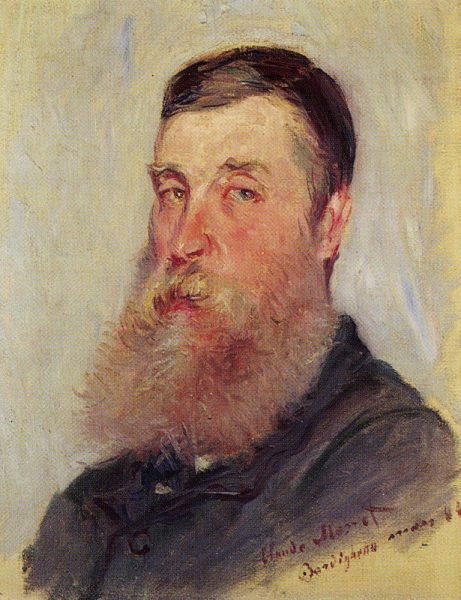
History
William Thompson was born in London in 1829 to parents who worked in the theatre. He began his career onstage in 1850 at the age of 21 at the Celeste Theatre in London. His early appearances onstage were in the chorus of the Music Hall and Variety-type entertainment that the Celeste principally presented. However, he was drawn to the short ballet performances that made up part of the evening and began to study ballet with the Celeste’s choreographer, Pierre Lefèvre, who had been trained in Paris at the Opéra. As a result of this, Thompson began to appear onstage in the short ballet divertissements during the evening, being one of the few male dancers Lefèvre had at his disposal.
In 1862, at the age of 33, Thompson staged his first piece of choreography as part of a variety show at the Celeste. The work was a light, whimsical trifle performed as part of a variety show at the Celeste, a venue known for its wide array of entertainment offerings. The piece, though not groundbreaking, was a success in its own right and was well received by the audience. By 1866 Thompson had officially retired from the stage at the Celeste and began to focus exclusively on choreography. Like his old teacher Lefèvre (who had by then retired), Thompson was not only asked to arrange the short ballet divertissements but was also asked to arrange the dances of the male and female chorus and even some waltzes, polkas and galops for the singers and other performers to add to their acts. However, Thompson grew ever ambitious and sought to expand the offerings of ballet, including more than one ballet performance during the evening and adding balletic flair to the other dances he choreographed.
In 1870, at the age of 41, Thompson founded his own troupe of dancers. His troupe performed at venues across London and soon became one of the foremost ballet troupes in London. The troupe most frequently performed at the Linden Theatre, where Thompson was able to present his first one-act ballet The Elements in 1871. The work was met with mixed reviews (as serious ballet was neither yet a well established nor well respected art form in London) but the reviews stated the piece was pretty to look at and at least worth seeing once. Thompson followed this with two more one-act pieces: The Pirates’ Victory in 1874 and The Harvest Festival in 1876.
In 1877, Thompson’s growing reputation caught the attention of James Henry Mapleson, the manager of Her Majesty’s Theatre, one of London’s most prestigious venues. In an unprecedented move, Mapleson engaged Thompson’s ballet troupe to stage a ballet for the reopening of the theatre in April 1877. It was decided to mount a new production of Perrot and Pugni’s 1843 ballet Ondine, to call back to London’s golden era of ballet under Perrot and Pugni. The idea of presenting a full-length, three-act ballet was considered ludicrous by some, as ballet had not been as established in London as St. Petersburg and Paris since its heyday under Perrot and Pugni. However, Mapleson believed that it would be a worthwhile gamble as he believed that due to the successes of ballet in Russia and Paris (and the British upper class greatly admiring the opulence of the Russian Court and fashionability of the French), a ballet would be successful.
Thankfully for Mapleson, his gamble turned out to be a successful one and the production sparked a renewed interest in ballet in Britain. Mapleson decided to continue reviving old London and Parisian successes from the 1840s and 1850s, continuing the revival of Ondine with stagings of Esmeralda (1878), Giselle (1879), The Five Senses (1880) and The Corsair (1881). Thompson was happy to rise to the occasion, arranging the ballets in his own style.
The 1881 production of The Corsair attracted the Duchess of Connaught (the wife of Queen Victoria’s third son Prince Arthur) to attend not only once, but twice, further lending credence to the continuation of ballet. The Duchess of Connaught would continue to be supportive of the ballet, eventually becoming patroness of the Royal Ballet at Covent Garden. Thus, from 1882, Thompson was given permission to mount two revivals a season. However, despite his successes, Thompson began to chafe under the increasing restrictions of Mapleson. Thompson wanted to choreograph his own original works instead of being restricted to revivals of older works, but Mapleson believed that attaching the allure of a by gone era was what brought in the audiences. The two began to clash as Thompson increasingly disregarded Mapleson’s suggestions in favour of his own.
In 1887, Thompson received an invitation from the Royal Italian Opera, Covent Garden, to move his ballet troupe. Thompson accepted the invitation, seen as a risk by some (as Her Majesty’s Theatre had been synonymous with serious ballet in London since the 1840s) but Thompson was determined to regain creative control. The troupe opened their residency at Covent Garden with a production of Ondine, the same ballet that had been used to open their residency at Her Majesty’s ten years earlier. For the 1887 season, Thompson was able to present his first fully original ballet since 1876, a one-act piece titled The Amphitrite, choreographed at breakneck speed so that it could première in the 1887 season. He followed this new creation with The Fairy of the Forest in 1888, Alice’s Adventures in Wonderland in 1890, Pygmalion in 1893 and The Swords of Toledo in 1896.
After nearly 35 years of work, William Thompson announced his retirement in 1896 at the age of 67. The official reason he gave for his retirement was the wish to spend more time with his daughters and the illness of his wife, though, thankfully, she eventually recovered. His final creation, The Swords of Toledo, was a lavish grand ballet in four acts set against the backdrop of medieval Spain, featuring sword fights, forbidden romance and stunning displays of virtuosity by the dancers. The ballet was hailed as Thompson’s greatest success, and its run of performances at Covent Garden marked the end of an era for Thompson.
Though Thompson’s active career ended, he continued occasionally to be involved in the ballet scene. His successor at Covent Garden, Richard Hague, continued to stage ballets that he had revised and created, often changing very little in their revivals and retaining much of his choreography and additions. Hague also called upon Thompson during the years of the Meisenburg Notations (1899-1914) to lend his knowledge of his works to the process of their notation.
Thompson’s Three “Periods”
Later scholars would categorise three distinct “periods” of Thompson’s choreography: his so-called early, middle and late (or mature) periods.
His early period is generally marked as beginning in 1870, when Thompson founded his troupe at the Linden and lasting until 1877, when his troupe became resident at Her Majesty’s. His early period is broadly characterised by its simplicity and “music hall” origins, rarely tackling large dramatic subjects or multi-act works.
His middle period is generally marked as beginning in 1877 at Her Majesty’s and lasting until 1889, the year following François Bardet‘s retirement and the première of The Fairy of the Forest. This period is characterised by his initial stagings of multi-act narrative ballets and creations of original works of more depth and scale. The 1877 staging of Ondine perhaps represents the turning point, as it was Thompson’s first foray into multi-act narrative ballet, as opposed to the shorter diversions of his early period. This period is strongly associated with Bardet as a composer, who revised and supplemented all of the ballets that Thompson staged in this period. The period also marked narrative ballet’s return in earnest to the London stage as well as its return to opera, championed by Thompson.
His late period is generally marked as beginning in 1889 with the revivals of Faust and The Corsair and lasting until his retirement in 1896. This period is characterised by its scale, architecture and maturity. Faust in particular represents a turning point, as its scale and grandeur were the most lavish that had been staged on the London stage since the days of Perrot and Pugni. The period is characterised by the expansion and refinement of previously staged works, leading to their “final versions” that would continue to be performed into the twentieth century. This period is also strongly associated with the composer Auguste Péchard, who took over the duty of revising and supplementing scores following Bardet’s retirement. Péchard also composed the scores for Thompson’s late period original works, culminating in the grand ballet The Swords of Toledo in 1896.
Though such a categorisation is useful for later scholars in better understanding Thompson and his creative development, it is worth noting that this distinction was not contemporary to Thompson and is a retrospective one. Additionally, there is some debate as to whether his late period should be said to have begun in 1889 with Faust or in 1890 with Alice’s Adventures in Wonderland, though the former inflection point is more generally accepted.
Ballets
The Linden Theatre
- The Elements (1871)
- The Pirates’ Victory (1874)
- The Harvest Festival (1876)
Her Majesty’s Theatre
- Ondine (1877*)
- Esmeralda (1878*)
- Giselle (1879*)
- The Five Senses (1880*)
- The Corsair (1881*)
- The Fairies’ Goddaughter (1882*)
- Marco Spada (1882*)
- The Buccaneers (1883*)
- The Devil to Pay (1883*)
- Coppelia (1885*)
- The Wayward Daughter (1886*)
- Sylvia (1886*)
The Royal Italian Opera, Covent Garden
- The Amphitrite (1887)
- Élodie or The Fairy of the Forest (1888)
- Faust (1889*)
- Alice’s Adventures in Wonderland (1890)
- The Beauty of Ghent (1891*)
- The Peri (1892*)
- Pygmalion (1893)
- The Sylph (1895*)
- The Swords of Toledo (1896)
New ballet
New revival / new production*
Other Selected Creations
The Lyceum Theatre
- Romeo and Juliet, Shakespeare (1882)
- Divertissement à Trois for Act 1 Scene 5 (for Isabella Velluti, Marguerite Lemoine and Samuel Penrose)
- Faust, Goethe (1885)
- Walpurgisnacht Ballet (Pas de Flore) (for Isabella Velluti)
- As You Like It, Shakespeare (1890)
- Pas de Deux (supplemental pas for Marta Draeger from the 1888 revival of Giselle)
- King Arthur (1895)
- Pas de Six (for Sarah Nicholson)
The Royal Italian Opera, Covent Garden
- Gli Ugonotti, Meyerbeer (1884)
- Act 3 Ballet
- Fausto, Gounod (1888)
- Act 5 Walpurgisnacht Ballet
- Guglielmo Tell, Rossini (1888)
- Act 1 Pas de Six and Pas d’Archers
- Act 3 Pas de Trois and Pas des Soldats
- Carmen, Bizet (1888)
- Ballet (L’Arlésienne Suite No. 1 (Bizet): Minuetto, Adagietto, Carillon)
- Aida, Verdi (1888)
- Act 2 Ballet
- Roberto il Diavolo, Meyerbeer (1889)
- Act 2 Pas de Cinq
- Act 3 Ballet des Nonnes Damnées
- Esmeralda, Thomas (1890)
- Pas de Deux Valsé (originally composed c. 1865, revived for Marta Draeger)
- Il Profeta, Meyerbeer (1890)
- Act 3 Ballet
The Theatre Royal, Drury Lane
- Cinderella (1895)