Ondine
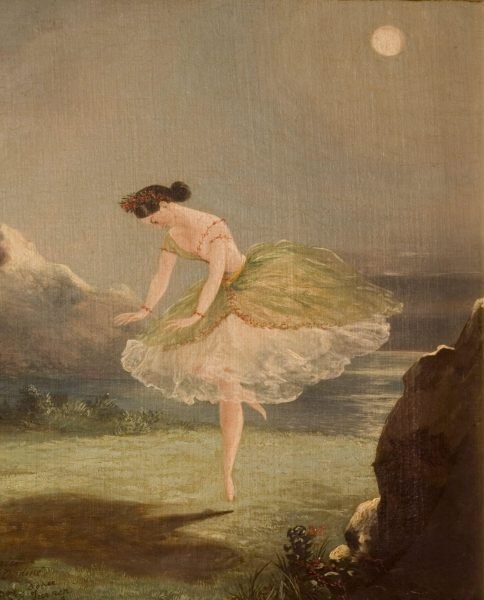
Ballet pantomime in three acts and five scenes premiered on 22nd June 1843 at Her Majesty’s Theatre, London
Choreography: Jules Perrot
Music: Cesare Pugni
Premiers Rôles
Ondine: Fanny Cerrito
Mattéo: Jules Perrot
Plot
Ondine, a beautiful naiad, falls in love with the mortal fisherman, Mattéo after he catches her in his net and pulls her ashore. Mattéo, however, is engaged to the beautiful Giannina, but is inflamed in the naiad’s passionate love and Ondine asks Hydrola, the Queen of the Sea to allow her to become human to be with her beloved.
Summary
Act 1
Scène 1
On the coast of Sicily, fisherfolk are preparing for the Festival of the Madonna. Mattéo, a fisherman, is present with his betrothed Giannina. He remains behind to pull his nets, and draws in a shell containing the naiad Ondine, who has fallen in love with him. She tries to tempt Mattéo, leading him up to a high rock from which she falls to the water, inviting Mattéo to follow. Some fishermen enter just in time to save him.
Scène 2
In Mattéo’s cottage he recounts his adventure to Giannina. A gust of wind blows open the window, and Ondine enters, visible only to Mattéo. She frustrates Giannina’s spinning. and eventually leaps onto the window looking over the sea. inviting Mattéo to follow. She resolves to show Mattéo something of her world in a dream.
Act 2
In a submarine cavern, Ondine rises amidst a group of nymphs and they dance a grand pas. Hydrola, the Queen of the Waters, warns Ondine against consorting with mortals, but the naiad, plucking a rose, is prepared to assume mortality if it means winning the sleeping Mattéo.
Act 3
Scène 1
At the shrine of the Madonna, the townspeople dance a tarantella. All kneel and pray at the Vespers bell. Ondine rises from a fountain and attracts the attention of Mattéo, who pursues her through the kneeling throng. Giannina brings him to his senses and he goes to fetch his boat. Ondine lures Giannina into the water, and assumes her shape. As a consequence of her assumed mortality, Ondine sees her shadow for the first time in the moonlight, and pursues it with fascination, eventually dancing with it joyously. Mattéo rows Ondine away, while Giannina is borne by naiads to the palace of Queen Hydrola.
Scène 2
Ondine is asleep in Giannina’s bed, and despite warning from Hydrola, refuses to relinquish her mortality, although weak and exhausted. Mattéo and his mother enter, and he and Ondine dance a tarantella in which Ondine continually tries to overcome her weariness, to Mattéo’s concern.
The fishermen enter to celebrate Mattéo and Ondine’s wedding. During the wedding procession, Ondine is hardly able to support herself. Hydrola and the naiads make a last effort to save Ondine. The Queen has restored Giannina to life and now leads her forward. Mattéo is overjoyed to recover his true love while Ondine resumes her immortal state and is borne in triumph to her home beneath the sea.
History
Original Production
Ondine ou La Naïade was one of the many creations by Jules Perrot and Cesare Pugni during their tenure at Her Majesty’s Theatre in London and was created as a vehicle for one of the five greatest Romantic ballerinas, the Italian Prima Ballerina Fanny Cerrito. The London season of 1843 was one of the most successful and highlights of Cerrito’s career because it saw not only the creation of Ondine, but a famous Pas de Deux she danced with Fanny Elssler. Cerrito was a favourite of the London audiences; she had previously enjoyed two successful appearances in the English capital in 1840 and 1841 and returned in May 1843 after a series of successful performances in her native Italy. For her return, Perrot and Pugni would create a new ballet for her that would become one of her most famous signature pieces. Diving once again into the world of the supernatural, the new ballet would be Ondine in six scenes, based on the story of a naiad, a maiden of the sea, who falls in love with a mortal man, who is already betrothed to a mortal woman.
The ballet was premièred at Her Majesty’s Theatre in London on the 22nd June 1843 and was a huge success, with Cerrito dazzling the audience. Perrot’s tenure as Ballet Master in London came to an end in 1848 after nearly a decade of staging many acclaimed and successful works and by 1849, he was serving as Premier Maître de Ballet to the Saint Petersburg Imperial Theatres. Pugni followed Perrot to Russia, where the composer was given the post of Official Composer of the Ballet Music to the Saint Petersburg Imperial Theatres. Like most European theatres of that time, Her Majesty’s Theatre in London only produced ballets as one or two-act diversions between scenes of operas, but the opera houses of Russia devoted entire evenings exclusively to ballet. In light of this, Perrot staged many of his works that had been mounted previously in London in elaborately expanded editions for the Saint Petersburg stage, requiring not only that Perrot add and embellish his original dances and mise-en-scène, but also that Pugni expand his scores.
In 1877 it was decided for the ballet to return to Her Majesty’s Theatre in London based on Pugni’s 1851 Russian revision. The production was a huge success and started a rebirth of ballet in London which up until then had struggled to find its feet after Pugni and Perrot’s departure.
The ballet was presented in three acts in five scenes with musical revisions by François Bardet. Ondine would go on to become one of the most popular ballets in London, if not the most popular ballet.
Selected Revivals
11 February [O.S. 30 January] 1851
Location: Imperial Bolshoi Kamenny Theatre, St Petersburg
Staged by Perrot under the title La Naïade et le Pêcheur with Pugni extensively revising his 1843 score.
23 July [O.S. 11 July] 1851
Location: Peterhof Palace, St Petersburg
Staged by Perrot on a stage was erected above the water of the lake of the Ozerky Pavilion.
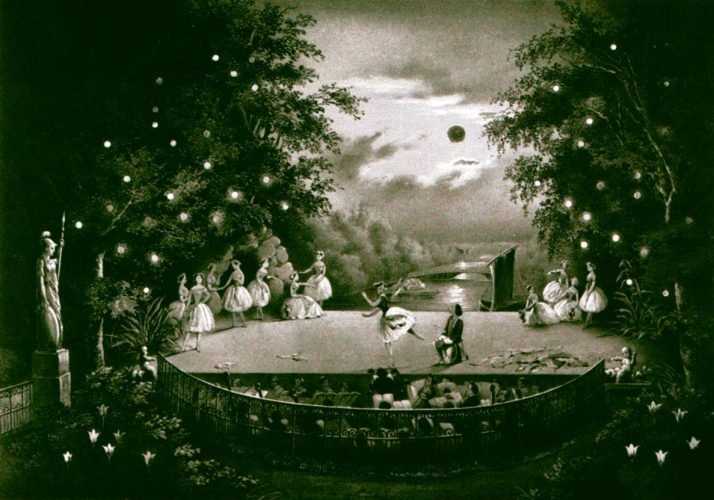
7 November [O.S. 27 October] 1874
Location: Imperial Bolshoi Kamenny Theatre, St Petersburg
Staged by Marius Petipa for Eugenia Sokolova with musical revisions by Ludwig Minkus.
2 October [O.S. 20 September] 1892
Location: Imperial Mariinsky Theatre, St Petersburg
Staged by Petipa for Varvara Nikitina with musical revisions by Riccardo Drigo.
London Revivals
1877 Revival
In 1877 William Thompson decided to revive the ballet at Her Majesty’s Theatre to open the residency of his troupe there. He engaged Isabella Velluti to dance the title role as he did not believe that the première danseuse of his troupe, Marguerite Lemoine, was quite right to portray the titular nymph. Lemoine was instead cast as Giannina.
Thompson decided to condense the ballet from three acts and six scenes to three acts and five scenes, combining scenes 5 and 6 (the scene of the withered rose and the wedding scene respectively) into one scene that took place in Giannina’s house.
As part of his revisions, Thompson would need the score to be revised. He called on his friend, François Bardet, to do so, requesting of Bardet if he would accept the commission to revise and supplement Pugni’s score. Bardet accepted, beginning the partnership that would define Thompson’s so called ‘Middle Period’ and would last until 1888.
Bardet, at Thompson’s request, adhered quite closely to the 1851 score, but was not averse to making revisions and rearrangements where Thompson requested them.
Though Thompson remained faithful to the original libretto, he re-choreographed most of the dances, being only slightly familiar with the Russian or the old English stagings of the ballet.
The ballet was well received and sparked a renewed interest in ballet among the English public with Velluti receiving praise for her dancing and mime. Thompson also received praise for his choreography, with one critic praising him thusly:
“Enough praise cannot be given to what Mssrs Thompson and Mapleson have accomplished with the new ballet produced at Her Majesty’s Theatre. They have so ably restored our theatre to its proper place in the way of ballet, with such grace, attractive groupings and depth of feelings not last seen since the days of Mssrs Perrot and Pugni.”
Rôles
Ondine: Isabella Velluti
Mattéo: Samuel Penrose
Giannina: Marguerite Lemoine
Musical Revisions
The Pas de Trois of the first scene of the first act was arranged into a Pas de Six. The pas was danced by Giannina and Mattéo supported by two ladies and two men.
A new variation was composed for Giannina in the Pas de Six.
A waltz was composed for the Grand Pas des Nayades.
Two variations were added for female sujets in the Grand Pas des Nayades. These variations were rearrangements by Bardet of two of Pugni’s original variations for this pas.
A new variation was composed for Hydrola in the Grand Pas des Nayades.
Variation for Hydrola in the Grand Pas des Nayades, composed by François Bardet (1877)
A new variation was composed for Ondine in the Grand Pas des Nayades.
Résumé des Scènes et Danses
Acte 1
Scène 1
1) Introduction
2) Scène Première
3) Scène
4) Scène – Ondine et Mattéo
5) Scène Dansante – La Tentation
6) Scène – Retour des Pêcheurs
7) La Napolitana
8) Pas de Six (adapted from Pugni’s score)
a) Entrée
b) Adage
c) Variation des deux hommes
d) Variation des deux dames
e) Variation de Mattéo
f) Variation de Giannina
g) Coda
9) Galop
10) Scène Finale
Scène 2
11) Entr’acte et Scène
12) Scène – Entrée de Giannina
13) Scène du Filage
14) Scène Dansante – Valse
15) Scène Finale
Acte 2
16) Entr’acte
17) Scène – Entrée des Nayades
18) Scène – Entrée d’Ondine
19) Scène – Récit d’Ondine
20) Grand Pas des Nayades
a) Adage
b) Valse des Nayades
c) Variation I (rearranged from Pugni’s score)
d) Variation II (rearranged from Pugni’s score)
e) Variation III – Hydrola
f) Variation IV – Ondine
g) Coda
21) Scène – Après le Pas
22) Pas du Bouquet
a) Andantino
b) Valse
c) Danse d’Ondine
d) Coda
23) Scène
24) Scène Finale
Acte 3
Scène 1
25) Marche
26) Scène
27) La Furlana
a) Danse d’Ensemble
b) Scène de Prière
c) Reprise de la Danse
28) Scène – Départ des Pêcheurs
29) Scène de Séduction
30) Pas de l’Ombre
a) Andante
b) Allegro
Scène 2
31) Entr’acte et Scène
32) Scène
33) Pas de la Rose Flétrie – Tarentelle
34) Scène et Entrée des Pêcheurs
35) Scène du Mariage
36) Scène Finale
1884 Revival
In 1884 the ballet was revived with Velluti again as the titular nymph. As Lemoine was retiring that year, the rôle of Giannina was given to Ashfield and the rôle of Hydrola to Mary Butler, a danseuse who had joined the troupe in 1883 as a sujet. No musical revisions were made to the ballet from the 1877 version.
Rôles
Ondine: Isabella Velluti
Giannina: Emma Ashfield
Hydrola: Mary Butler
1887 Revival
In 1887 Thompson revived the ballet to open his residency at the Royal Italian Opera at Covent Garden due to quarrels with the theatre director at Her Majesty’s Theatre.
Following the retirement of Isabella Velluti, Thompson had invited Marta Draeger to become première danseuse in his troupe. She accepted and made her debut on the Covent Garden stage as the titular nymph in Ondine, two weeks after the previously scheduled date at Her Majesty’s Theatre. Her performances were a great success with critics and the audience alike praising her grace, lightness, technical skill and dramatic acting. Musical revisions were again undertaken by Bardet.
Rôles
Ondine: Marta Draeger
Mattéo: Samuel Penrose
Giannina: Emma Ashfield
Hydrola: Sarah Nicholson
Pas de Trois: Mary Butler
Musical Revisions
A new variation was added for Penrose as Mattéo in the Pas de Six of the first scene of the first act. This variation was originally composed for a Pas de Trois that was intended to be inserted into the first scene of the third act, but it was eventually decided to transfer the variation to the Pas de Six.
A new variation was composed for Draeger as Ondine in the Grand Pas des Nayades of the second act.
A Pas de Trois was added to the first scene of the third act. Though Pugni had composed a Pas de Cinq to be inserted into this scene of the ballet when it was expanded in Russia, Thompson chose to replace the pas. It was initially planned to adapt Pugni’s pas into a Pas de Trois, with the Entrée, Coda and two female variations (Variation I and Variation III) being adapted from Pugni’s music while the male variation (Variation II) would be newly composed by Bardet. However, such an insertion would have made the third act comparatively too long (as a new Pas de la Rose Flétrie was to be added to the second scene of the third act) so it was decided to cut the pas. The male variation was transferred to the Pas de Six as a variation for Mattéo and new music for a shorter Pas de Trois (on the rhythm of a polka mazurka) was composed by Bardet. However, the shorter polka mazurka was included at the première, the pas was cut during the run as its inclusion still made the third act comparatively too long.
A brand new Pas de la Rose Flétrie was added to replace Pugni’s original tarentelle. This pas was set to Bardet’s original music and was composed for Draeger’s debut. It went on to become a celebrated part of the ballet, with Draeger being praised for her acting in portraying the gradually wearying nymph.
Variation à Deux from the Pas de la Rose Flétrie for Miss Draeger as Ondine, composed by François Bardet (1887)
Résumé des Scènes et Danses
Acte 1
Scène 1
1) Introduction
2) Scène Première
3) Scène
4) Scène – Ondine et Mattéo
5) Scène Dansante – La Tentation
6) Scène – Retour des Pêcheurs
7) La Napolitana
8) Pas de Six
a) Entrée
b) Adage
c) Variation des deux hommes
d) Variation des deux dames
e) Variation de Mattéo
f) Variation de Giannina (1877)
g) Coda
9) Galop
10) Scène Finale
Scène 2
11) Entr’acte et Scène
12) Scène – Entrée de Giannina
13) Scène du Filage
14) Scène Dansante – Valse
15) Scène Finale
Acte 2
16) Entr’acte
17) Scène – Entrée des Nayades
18) Scène – Entrée d’Ondine
19) Scène – Récit d’Ondine
20) Grand Pas des Nayades
a) Adage
b) Valse des Nayades (1877)
c) Variation I
d) Variation II
e) Variation III – Hydrola (1877)
f) Variation IV – Ondine (for Miss Draeger)
g) Coda
21) Scène – Après le Pas
22) Pas du Bouquet
a) Andantino
b) Valse
c) Danse d’Ondine
d) Coda
23) Scène
24) Scène Finale
Acte 3
Scène 1
25) Marche
26) Scène
27) Pas de Trois
28) La Furlana
a) Danse d’Ensemble
b) Scène de Prière
c) Reprise de la Danse
29) Scène – Départ des Pêcheurs
30) Scène de Séduction
31) Pas de l’Ombre
a) Andante
b) Allegro
Scène 2
32) Entr’acte et Scène
33) Scène
34) Pas de la Rose Flétrie
a) Andante
b) Valse – Variation à Deux
c) Coda
35) Scène et Entrée des Pêcheurs
36) Scène du Mariage
37) Scène Finale
1901 Revival
In 1901, after 14 years of absence from the troupe’s repertory, the ballet was revived for Sarah Nicholson.
The ballet had fallen out of the repertory primarily due to Draeger, who, though praised for her 1887 portrayal of the titular naiad, did not particularly like the ballet. Despite Draeger’s personal opinions of the ballet, the second act was revived with Draeger as Ondine for a State Performance given on the 8 July 1891 for the German Emperor and Empress.
Following Draeger’s departure from London in 1894, Nicholson made it her mission to assert herself in all of Draeger’s rôles and, if possible, her pas. However, she was not opposed to substituting pas that she personally did not wish to dance, leading to the standard version of today.
Nicholson asked Richard Hague if the ballet could be revived for her and he granted the request, re-establishing the ballet in London consciousness and setting the new standard for danseuses to come.
Rôles
Ondine: Sarah Nicholson
Musical Revisions
Auguste Péchard was commissioned to revise the score, contributing new orchestrations to the second act to include harp figurations reminiscent of the movement of water.
A new variation was added for Giannina in the Pas de Six. This variation was a supplemental variation composed for Marguerite in the Grand Pas de Séduction in the 1889 revival of Faust.
The Faust variation was retained for the 1907 and 1910 revivals of the ballet and became the standard variation for this pas. However, when the ballet was re-choreographed in the 1960s a new variation was interpolated for Giannina, a variation taken from a supplemental Pas de Deux that had been written in 1888 for Draeger’s performances in Giselle. It is also worth noting that the male variation from Draeger’s Giselle pas is danced in the modern staging of the Grand Pas de Deux Noble from The Devil to Pay, being interpolated there by Frederick Hale in 1894. Modern productions are divided as to which of the two variations to use, as the Royal Ballet has reverted to the Faust variation since 1994 while the Paris Opera Ballet has retained the Giselle variation.
A new variation was interpolated into the Grand Pas des Nayades for the second sujet. This variation was a supplemental variation composed for one of the sujets in the Grand Pas des Sylphides in the 1895 revival of The Sylph.
A new variation was interpolated for Nicholson as Ondine in the Grand Pas des Nayades. This variation was also taken from the 1895 revival of The Sylph, and was originally composed as Nicholson’s variation in the Grand Pas des Sylphides. Despite the ballet’s place in the history of the art form (having been made famous by Marie Taglioni, considered to be the greatest ballerina of her age) the revival was not very popular with the London audiences. Nevertheless, Nicholson liked the variation well enough and so interpolated it into Ondine, where it became the standard variation in the pas.
Résumé des Scènes et Danses
Acte 1
Scène 1
1) Introduction
2) Scène Première
3) Scène
4) Scène – Ondine et Mattéo
5) Scène Dansante – La Tentation
6) Scène – Retour des Pêcheurs
7) La Napolitana
8) Pas de Six
a) Entrée
b) Adage
c) Variation des deux hommes
d) Variation des deux dames
e) Variation de Mattéo (1887)
f) Variation de Giannina (supplemental variation written for Marguerite in the Grand Pas de Séduction in the 1889 revival of Faust)
g) Coda
9) Galop
10) Scène Finale
Scène 2
11) Entr’acte et Scène
12) Scène – Entrée de Giannina
13) Scène du Filage
14) Scène Dansante – Valse
15) Scène Finale
Acte 2
16) Entr’acte
17) Scène – Entrée des Nayades
18) Scène – Entrée d’Ondine
19) Scène – Récit d’Ondine
20) Grand Pas des Nayades
a) Adage
b) Valse des Nayades (1877)
c) Variation I
d) Variation II (supplemental variation written for the Grand Pas des Sylphides in the 1895 revival of The Sylph)
e) Variation III – Hydrola (1877)
f) Variation IV – Ondine (supplemental variation written for the Sylph in the Grand Pas des Sylphides in the 1895 revival of The Sylph)
g) Coda
21) Scène – Après le Pas
22) Pas du Bouquet
a) Andantino
b) Valse
c) Danse d’Ondine
d) Coda
23) Scène
24) Scène Finale
Acte 3
Scène 1
25) Marche
26) Scène
27) La Furlana
a) Danse d’Ensemble
b) Scène de Prière
c) Reprise de la Danse
28) Scène – Départ des Pêcheurs
29) Scène de Séduction
30) Pas de l’Ombre
a) Andante
b) Allegro
Scène 2
31) Entr’acte et Scène
32) Scène
33) Pas de la Rose Flétrie (1887)
a) Andante
b) Valse – Variation à Deux
c) Coda
34) Scène et Entrée des Pêcheurs
35) Scène du Mariage
36) Scène Finale